Reviewed and approved by Dr. Martin Moore-Ede, The Light Doctor
Most people think of sleep as something that happens at night.
But your body doesn’t.
Your body operates on a continuous, 24-hour cycle. One that controls when you feel alert, how your metabolism functions, how your hormones are released, and even how your cells repair themselves.
This program governs your circadian rhythms.
And according to decades of research by Martin Moore-Ede, it may be one of the most important - and most overlooked - drivers of long-term health and longevity.
The Clocks Inside Your Body
In his foundational work, THE LIGHT DOCTOR: Using Light to Boost Health, Improve Sleep, and Live Longer, Dr. Moore-Ede describes the human body as a network of biological clocks, all synchronized to the 24-hour cycle of light and darkness.
At the center is the suprachiasmatic nucleus (SCN) in the brain - a master clock that coordinates timing across nearly every system in the body.
This internal timing system regulates:
- sleep and wake cycles
- hormone release (like cortisol and melatonin)
- body temperature
- metabolism and insulin sensitivity
- immune function
When these rhythms are aligned, your body operates efficiently and predictably.
When they’re not, things start to break down—often long before symptoms appear.
Circadian Rhythm and Longevity: The Missing Link
Much of modern health advice focuses on what you do—what you eat, how you exercise, which supplements you take.
Circadian biology focuses on when.
That distinction matters.
Dr. Moore-Ede’s research, along with broader circadian science, has shown that disrupting natural biological rhythms can significantly increase the risk of chronic disease. In particular, circadian misalignment has been linked to:
- metabolic disorders like insulin resistance and type 2 diabetes
- cardiovascular disease
- hormonal imbalances
- cognitive decline
- increased cancer risk
In fact, the World Health Organization has classified chronic circadian disruption, particularly from shift work, as a probable carcinogen due to its effects on melatonin suppression and cellular repair mechanisms.
This is a critical insight:
You can be doing many of the right things for your health - but if your circadian clock is off, your results will be too.
How Modern Life Disrupts Your Biological Clock
The human circadian system evolved in a world governed by sunlight and darkness.
Today, we live in a world governed by:
- artificial light late into the night
- screens that emit blue light
- irregular sleep schedules
- late-night eating
- constant stimulation
Dr. Moore-Ede has been particularly outspoken about the impact of artificial light exposure at night. In his work on circadian lighting and workplace health, he demonstrates how even relatively low levels of light after sunset can suppress melatonin—the hormone that signals your body to initiate repair and recovery.
The result is subtle but powerful:
Your body receives mixed signals about what time it is.
And when your body doesn’t know what time it is, it can’t regulate itself properly.
The Downstream Effects: When Timing Breaks, Systems Follow
Circadian disruption rarely shows up as a single obvious issue. Instead, it creates ripple effects across multiple systems.
Hormones are often the first to shift. Cortisol, which should peak in the morning and taper throughout the day, can become flattened or elevated at night. Melatonin production may be delayed or suppressed entirely.
Metabolism follows closely behind. Insulin sensitivity drops when meals are consumed late in the day, increasing the likelihood of fat storage and impaired glucose control. Over time, this can lead to weight gain and metabolic dysfunction—even in people who are otherwise “doing everything right.”
Inflammation also increases. Chronic circadian misalignment has been associated with elevated inflammatory markers, slower recovery, and increased long-term disease risk.
And then there’s cognition. Poor circadian alignment can impair focus, memory, and mental clarity in the short term, while contributing to neurodegenerative risk over time.
What makes this especially challenging is that these changes often occur gradually.
You don’t notice your rhythm breaking.
You just start to feel “off.”
Why Most People Never Catch It Early
One of the biggest gaps in modern healthcare is that circadian dysfunction is rarely measured directly.
A typical annual physical looks at a small set of biomarkers—often just enough to detect established disease. It does not evaluate how your body is functioning over time, or whether your internal rhythms are aligned.
But circadian disruption leaves fingerprints.
Not in one number—but in patterns.
Subtle shifts in:
- cortisol regulation
- glucose and insulin
- inflammatory markers
- hormone balance
- nutrient status
These patterns can indicate that your system is out of sync long before anything is flagged as “abnormal.”
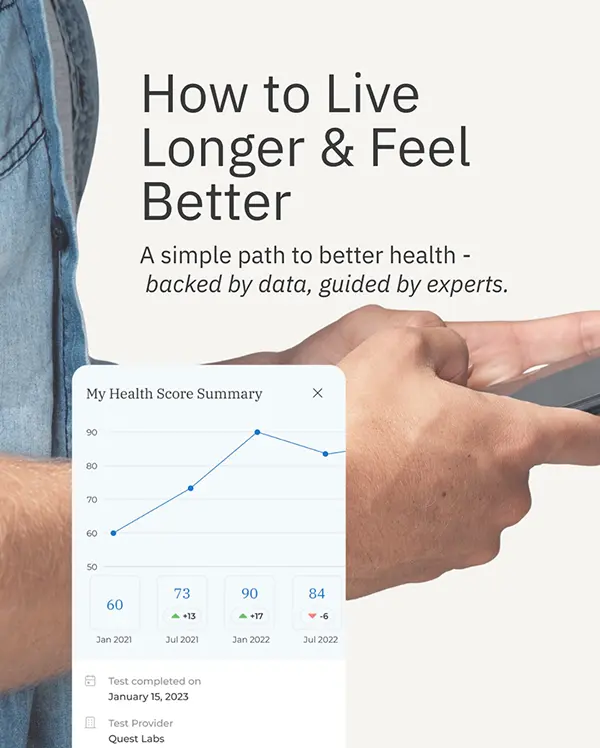
That’s why more comprehensive biomarker testing—looking across systems, not just isolated values—is critical for understanding what’s actually happening beneath the surface. EverSpan Life’s approach of analyzing 100+ biomarkers across multiple systems is designed to detect these early patterns and trends over time.
What Realignment Actually Looks Like
The good news is that the circadian rhythm is highly responsive to change.
But the changes need to be intentional.
Light is the most powerful lever. Exposure to natural light in the morning helps anchor your circadian clock, while reducing artificial light at night allows melatonin to rise as it should.
Consistency matters just as much. Going to sleep and waking at the same time each day reinforces your body’s internal timing, making sleep more restorative and energy more stable.
Meal timing plays a role as well. Eating earlier in the day, when your metabolism is more active, supports better glucose control and energy utilization.
Even exercise has a timing component. Aligning physical activity with your body’s natural energy peaks can improve performance and recovery, while avoiding intense late-night workouts helps protect sleep quality.
None of these interventions is extreme.
But together, they create alignment.
From Guessing to Knowing
Most people approach their health reactively. They try a new habit, see how they feel, and adjust from there.
But circadian biology doesn’t always produce immediate, obvious feedback.
That’s where data becomes powerful.
By tracking biomarkers over time, you can begin to see:
- Whether your cortisol rhythm is normalized
- How your metabolism responds to changes in timing
- Whether inflammation is decreasing
- How is your body adapting overall
Instead of guessing, you gain visibility.
Instead of reacting, you can guide your trajectory.
The Bigger Picture
Circadian rhythm isn’t just about sleep.
It’s about coordination.
It’s the system that ensures everything in your body is happening at the right time, in the right order, with the right intensity.
When that system is aligned, your body works with you.
When it’s not, everything becomes harder than it should be.
As Dr. Moore-Ede’s work has consistently emphasized, health isn’t just about what you do—it’s about when your body is able to respond.
Where to Start
If you’ve been feeling persistently tired, mentally foggy, or metabolically stuck despite making healthy choices, it may not be a matter of effort.
It may be a matter of timing.
The first step is understanding what your body is actually doing.
Because once you can see your patterns, you can begin to change them.
And when you change your timing, you change your trajectory.
Final Thought
Your body already knows what time it is.
The question is whether your lifestyle—and your health data—are aligned with it.