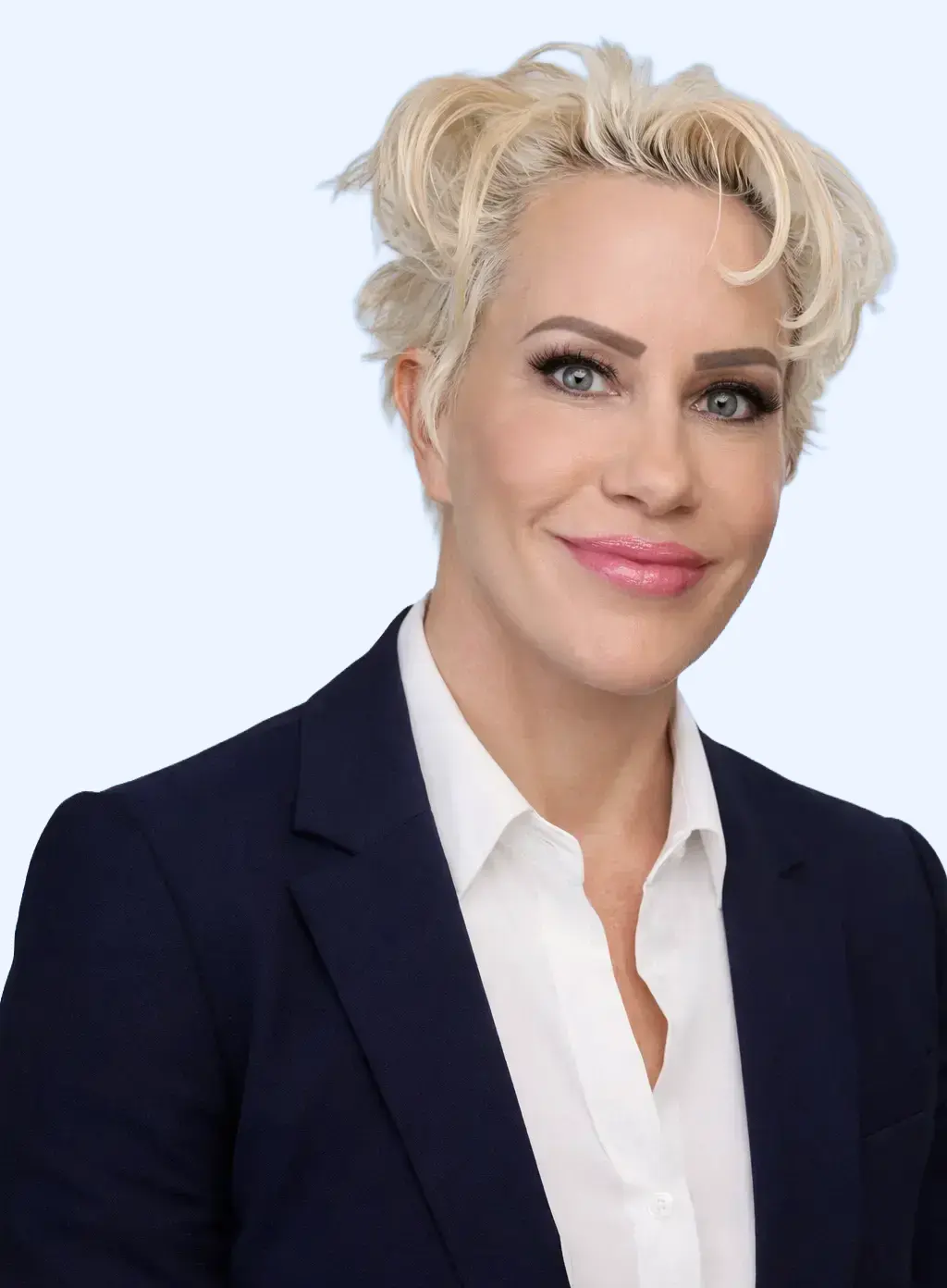
Dr. Julie Kaesberg is a physician specializing inintegrative and regenerative medicine, with a focus on optimizing healthspan —not just lifespan. With a background in anesthesiology, she brings asystems-based approach to care that looks beyond disease management to thebiological processes that influence energy, resilience, recovery, and long-termvitality. Her work centers on identifying early shifts in health and supportingthe body’s capacity for repair and balance through personalized, evidence-informedstrategies. By blending modern medical insight with proactive care, Dr.Kaesberg helps patients maintain strength, clarity, and function as they age.She is passionate about redefining what it means to grow older — empoweringindividuals to preserve mobility, independence, and quality of life across thedecades.
Board Certifications
American Board of Anesthesiology, Anti-Aging and Regenerative Medicine
Education
Medical School: Uniformed Services University, Naval Medical Center San Diego internship and residency in Anesthesia
Areas of Expertise
Metabolic, Hormonal (Men), Hormonal (Women), Longevity Medicine, Functional Medicine, Genetics, Nutrition / Weight Management, Aesthetic / Beauty, Peptides, Neurology / Brian / Cognitive, Sleep / Circadian, Cardiovascular
In simple terms, what is your specialty?
Integrative and functional medicine, anti-aging and regenerative medicine
Why is this critical for healthspan (not just lifespan)?
Modern medicine has become exceptionally good at helping people live longer.
But living longer is not the same as living well longer.
Many people now spend the final decades of life managing fatigue, joint degeneration, metabolic decline, cognitive slowing, and chronic inflammation. These changes rarely appear overnight — they develop slowly, often years before disease is formally diagnosed.
Traditional healthcare is designed to treat illness once it exists.
Integrative and regenerative medicine focuses on preserving function before it is lost.
This is the difference between lifespan and healthspan.
Healthspan is about maintaining the strength, energy, clarity, and resilience that allow you to move freely, think clearly, recover efficiently, and fully engage in life as you age.
Our approach blends the best of modern science with systems-based care to support the biological processes that influence long-term vitality, including metabolic balance, inflammation, hormonal signaling, tissue integrity, and cellular repair.
Rather than waiting for breakdown, we aim to:
▪️identify early shifts in physiology
▪️support recovery and repair
▪️optimize performance across the lifespan
Regenerative therapies further expand what’s possible by addressing structural decline — supporting joint health, connective tissue integrity, and the body’s natural ability to heal.
The goal is not simply to extend life.
It is to help patients remain active, capable, and independent for as many years as possible — compressing the period of decline so that later decades are defined by vitality rather than limitation.
This is healthspan-focused care.
And it represents a broader vision of what it means to age well.
What is one misconception about your field?
One of the most common misconceptions about longevity medicine is that it is simply about living as long as possible.
In reality, longevity medicine is not focused on extending life at any cost.
It is focused on preserving function.
Longevity care is often misunderstood as a collection of anti-aging treatments or experimental interventions aimed at slowing time itself. But the true goal is far more practical — to reduce the gap between how long we live and how long we live well.
A longer life without strength, clarity, mobility, or independence is not the outcome most people seek.
Longevity medicine addresses the biological processes that quietly shape how we age long before disease appears. By supporting metabolic health, reducing chronic inflammation, maintaining tissue integrity, and improving recovery capacity, it aims to delay the functional decline that makes aging feel limiting.
The objective is not to chase immortality.
It is to help individuals remain capable, resilient, and engaged throughout their later decades — so that added years are marked by vitality, not dependence.
Longevity medicine is therefore less about adding years to life…
…and more about adding life to years.
What early warning markers do most people overlook? And what happens long term if this area is ignored?
Many of the earliest indicators of declining health do not appear on standard diagnostic thresholds.
They show up as subtle shifts — changes that are easy to dismiss because they fall within “normal” ranges or develop gradually over time.
Early warning markers often include:
▪️declining metabolic flexibility
▪️rising low-grade inflammation
▪️disrupted sleep or recovery
▪️changes in body composition despite stable weight
▪️reduced resilience to stress
▪️early joint stiffness or connective tissue discomfort
Individually, these signs may seem minor.
Together, they reflect underlying changes in energy production, tissue repair, and systemic regulation.
When these early shifts are overlooked, the body adapts — often in ways that are initially compensatory but become progressively less efficient.
Over time, this can lead to:
▪️persistent fatigue
▪️metabolic dysfunction
▪️chronic inflammation
▪️accelerated musculoskeletal decline
▪️reduced cognitive resilience
What begins as subtle imbalance can gradually transition into structural and functional deterioration.
Integrative and regenerative medicine aim to recognize and address these early signals before they evolve into more significant limitations.
By intervening upstream — supporting metabolic balance, recovery capacity, and tissue integrity — it becomes possible to preserve function and reduce the long-term burden of age-related decline.
The goal is not simply to treat disease once it emerges.
It is to recognize the early signals that shape how health unfolds over time — and to respond while adaptation remains possible.
What does traditional healthcare get wrong about prevention?
Many of the earliest indicators of declining health do not appear on standard diagnostic thresholds.
They show up as subtle shifts — changes that are easy to dismiss because they fall within “normal” ranges or develop gradually over time.
Early warning markers often include:
▪️declining metabolic flexibility
▪️rising low-grade inflammation
▪️disrupted sleep or recovery
▪️changes in body composition despite stable weight
▪️reduced resilience to stress
▪️early joint stiffness or connective tissue discomfort
Individually, these signs may seem minor.
Together, they reflect underlying changes in energy production, tissue repair, and systemic regulation.
When these early shifts are overlooked, the body adapts — often in ways that are initially compensatory but become progressively less efficient.
Over time, this can lead to:
▪️persistent fatigue
▪️metabolic dysfunction
▪️chronic inflammation
▪️accelerated musculoskeletal decline
▪️reduced cognitive resilience
What begins as subtle imbalance can gradually transition into structural and functional deterioration.
Integrative and regenerative medicine aim to recognize and address these early signals before they evolve into more significant limitations.
By intervening upstream — supporting metabolic balance, recovery capacity, and tissue integrity — it becomes possible to preserve function and reduce the long-term burden of age-related decline.
The goal is not simply to treat disease once it emerges.
It is to recognize the early signals that shape how health unfolds over time — and to respond while adaptation remains possible.
Why does advanced biomarker testing and tracking matter?
Health does not change suddenly — it shifts gradually, often long before symptoms or disease appear.
Many of these early shifts occur beneath the surface of standard screening, within systems that influence energy production, inflammation, recovery, and resilience. Conventional testing is designed to identify disease once it becomes measurable.
Advanced biomarker testing looks upstream.
By examining patterns in metabolic function, inflammatory signaling, hormonal balance, and tissue stress, it becomes possible to recognize subtle changes that reflect how the body is adapting over time.
Tracking these markers provides more than a snapshot.
It reveals direction.
Trends can highlight:
▪️emerging inefficiencies in metabolism
▪️persistent low-grade inflammation
▪️changes in recovery capacity
▪️early shifts in cardiovascular or cognitive risk
When monitored consistently, these insights allow for earlier, more targeted support — helping to preserve function rather than waiting to restore it after decline has taken hold.
The value of advanced testing is not in finding problems sooner for their own sake.
It is in understanding how health evolves over time — and responding while balance and resilience can still be maintained.
Was there a defining moment in your career?
There was a day that changed everything.
I was driving home after an anesthesia shift — one I had come to realize no longer aligned with who I was becoming. On the way home, my car hydroplaned and slid beneath a guardrail.
In an instant, the roof collapsed, the windshield shattered, and time seemed to slow.
When the vehicle came to a stop, I was still there.
Uninjured.
When the responding officer looked through the window, he remarked that he couldn’t believe I hadn’t been decapitated.
It was a moment that forced an uncomfortable but necessary question:
What am I doing with my life?
I had nearly lost it — on the way home from work that I didn’t find meaningful.
Even before that day, I had been exploring functional and integrative medicine, drawn to the possibility of helping people improve their health in deeper, more lasting ways.
The accident clarified what had been quietly building.
I didn’t want to spend my career focused solely on managing disease within established algorithms.
I wanted to support the systems that create health — to help people feel better, function better, and maintain vitality over time.
That experience became a turning point.
It redirected my path toward integrative and regenerative medicine — a field that allows for a broader view of health and the opportunity to make a meaningful impact on how people live, not just how they are treated when illness appears.
Why did you join EverSpan Life?
I am a founder of EverSpan Life, it was created months after the above defining moment.
What excites you most about ESL’s mission?
Instead of waiting for disease to appear and then managing it, this approach asks a different question:
What creates health in the first place?
It looks beyond symptoms to the systems that shape how we feel and function every day — metabolism, inflammation, recovery, resilience, and repair. It recognizes that many of the changes that influence long-term wellbeing begin quietly, long before a diagnosis is made.
This perspective opened the door to a more proactive form of care.
One that supports:
▪️energy production
▪️tissue integrity
▪️nervous system balance
▪️metabolic flexibility
Rather than simply reacting to decline.
It offered the opportunity to help people improve how they live now — not just extend how long they live later.
Most compelling was the idea that health is not static.
It evolves.
And by understanding and supporting the body’s adaptive systems, it becomes possible to influence that trajectory in meaningful ways.
That possibility — to help preserve vitality, function, and resilience — is what continues to inspire my work in this field.
Current Practice or Institution Affiliation
EverSpan Life
Board Certifications
APTA
Education
Doctorate PT
Areas of Expertise
Preventative Medicine, Functional Medicine, Sports Medicine, Peptides
In simple terms, what is your specialty?
Diagnosis, prevention, and treatment of musculoskeletal injuries
Why is this critical for health span (not just lifespan)?
Movement is critical
What is one misconception about your field?
It is like massage
What early warning markers do most people overlook? And what happens long term if this area is ignored?
Inflammatory markers
What does traditional healthcare get wrong about prevention?
Traditional medicine does not address prevention and instead works with sick or injured care
Why does advanced biomarker testing and tracking matter?
Allows you to be preventative
Was there a defining moment in your career?
When I encountered health issues and my fathers journey with Lewy Body Dementia
Why did you join EverSpan Life?
Best option out there
What excites you most about ESL’s mission?
They are really geared toward the clients journey

.svg)

.svg)